←
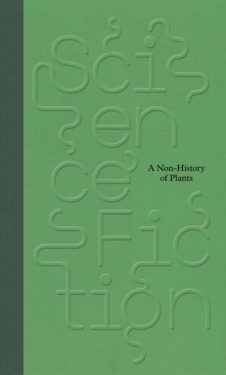
Science/Fiction: A Non-History of Plants
Science/Fiction: A Non-History of Plants
Maison Européenne de la Photographie/Victoria Aresheva/Clothilde Morette
216 pages
Hardcover
Leipzig October, 2025
ISBN: 9783959058582
Edition Number: 2
Width: 15 cm
Length: 23.5 cm
Language(s): English
Editor
Maison Européenne de la Photographie, Victoria Aresheva, Clothilde Morette
Author
Felix Hoffmann, Simon Baker, Giovanni Aloi, Natsumi Tanaka, Michael Marder
Designer
Natasha Agapova
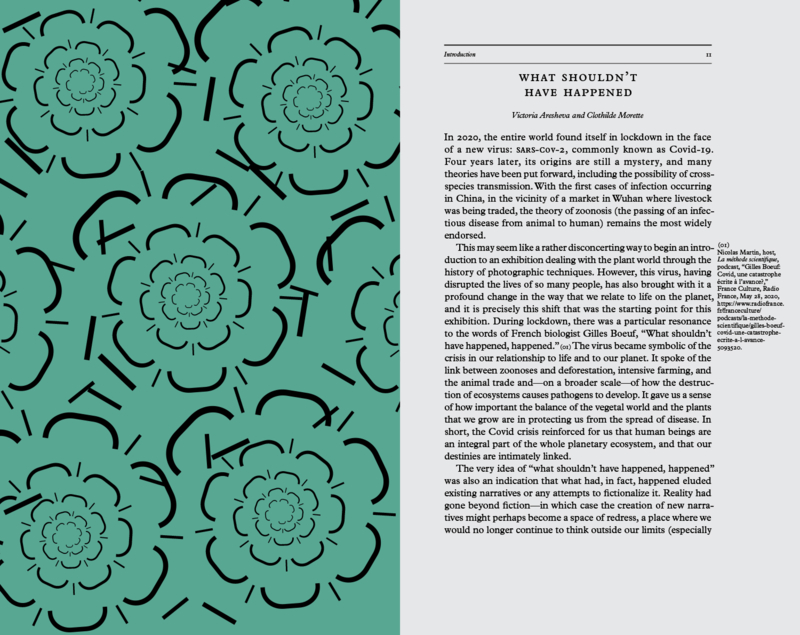
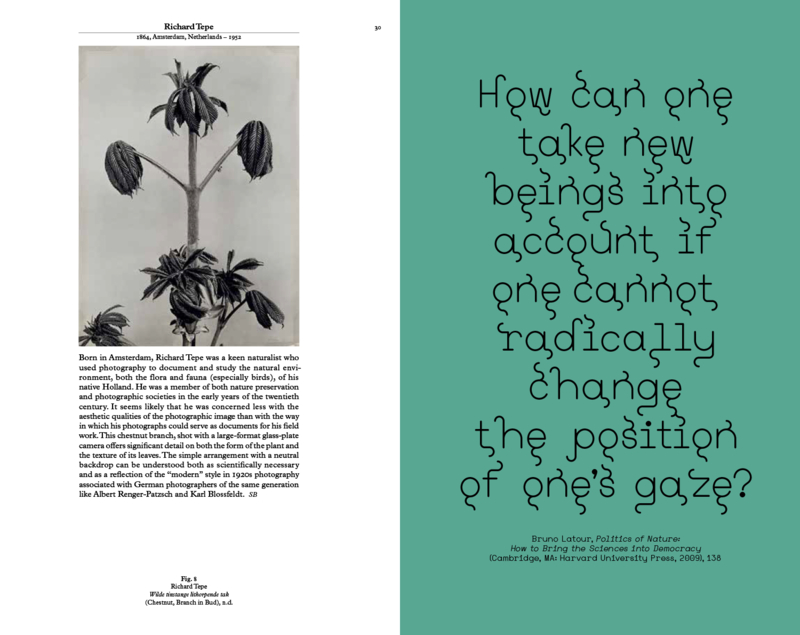
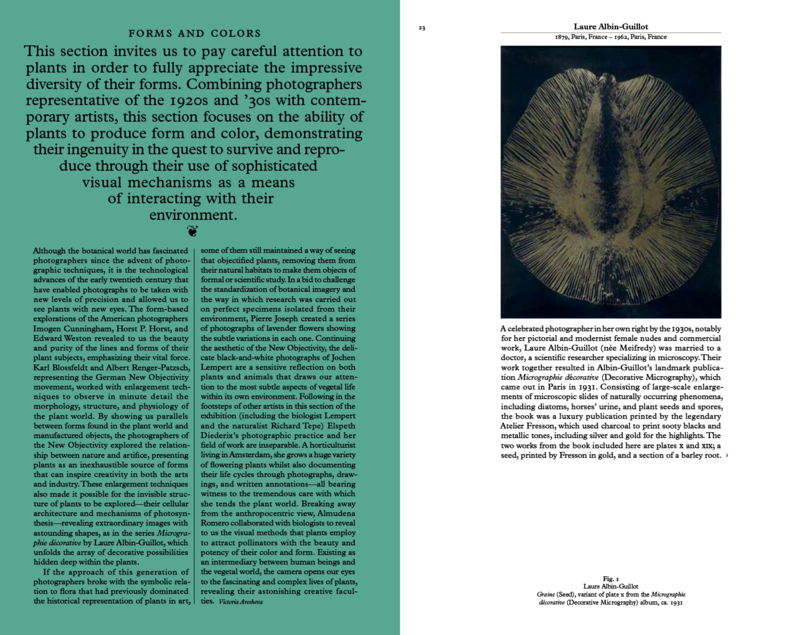
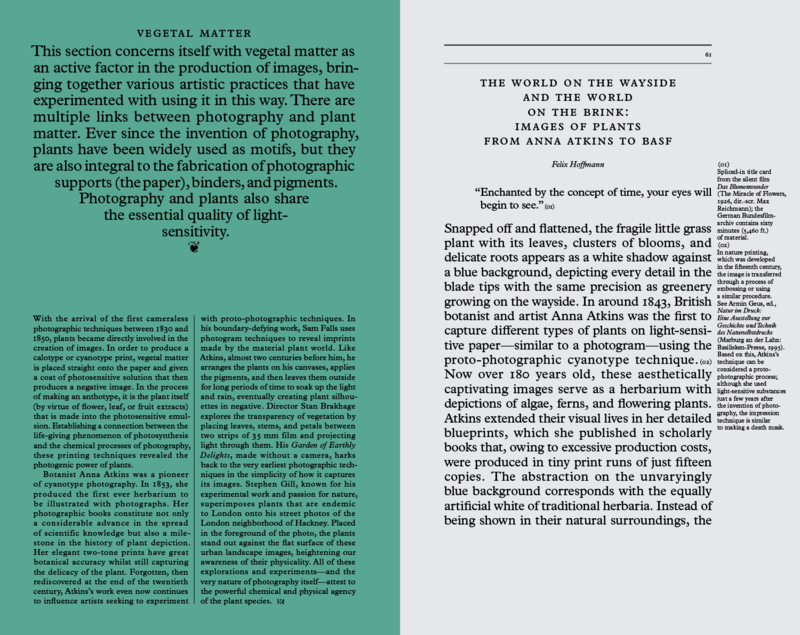
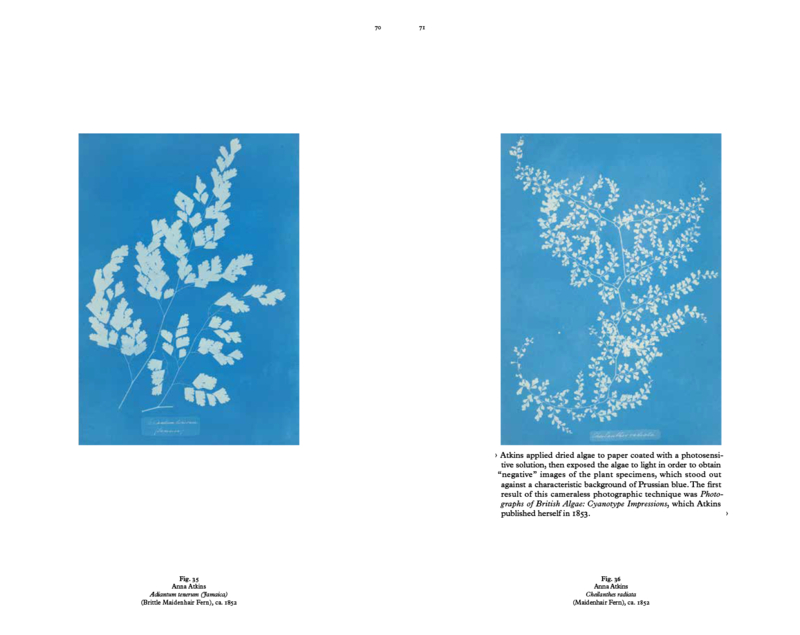
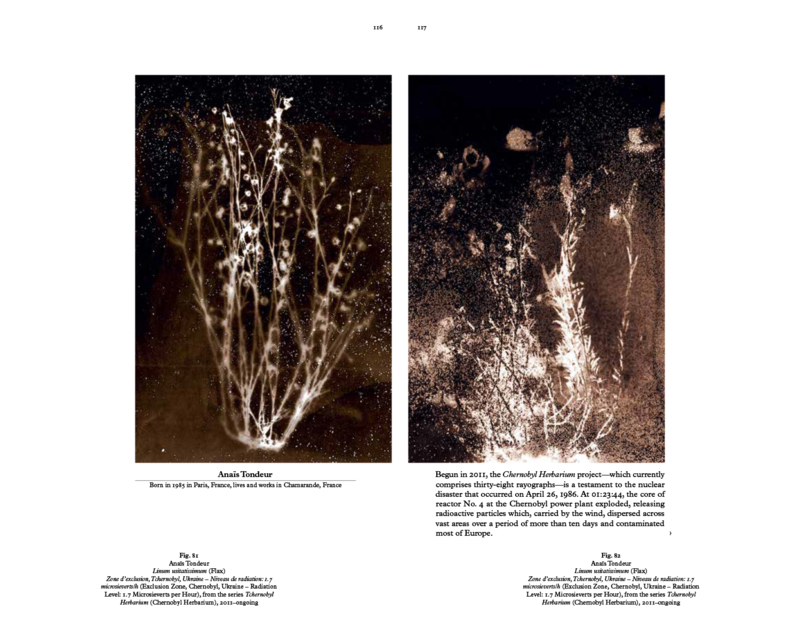
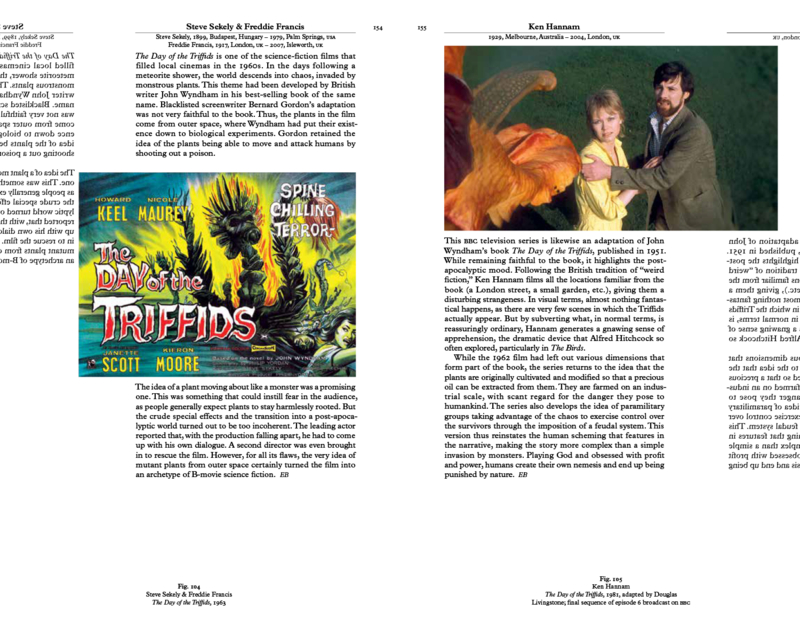
From scientific discoveries to animist beliefs, from dread linked to genetic mutations to political narratives, from repulsion to fascination—plants are an inexhaustible source of stories that reveal our most intimate desires and fears. The book questions human projections and representations of the vegetal world, bringing to light the subjectivity, intelligence, and expressive abilities of plants. Lens-based images are primary witnesses to this. The publication traces a visual history of plants, linking art, technology, and science from the mid-nineteenth century to the present day, not chronologically, but through two conceptual frameworks: scientific and fictional. Bringing together more than thirty artists across different periods of time and parts of the world, it employs the logic of the science-fiction novel, taking us from a stable, identifiable world and gradually plunging us into uncertain landscapes.
Reviews
Green Intelligences: imagining the Vegetal between Photography and Science Fiction
One of the book’s most compelling aspects is its sustained dialogue between science and animism, rational knowledge and symbolic imagination. Plants emerge as sentient beings, silent observers, or political allies, reflecting contemporary urgencies such as ecological crisis, biotechnology, and the redefinition of boundaries between the natural and the artificial. The vegetal thus becomes a lens through which to read broader social transformations and collective anxieties.
→
One of the book’s most compelling aspects is its sustained dialogue between science and animism, rational knowledge and symbolic imagination. Plants emerge as sentient beings, silent observers, or political allies, reflecting contemporary urgencies such as ecological crisis, biotechnology, and the redefinition of boundaries between the natural and the artificial. The vegetal thus becomes a lens through which to read broader social transformations and collective anxieties.
→